Guide
How to Complain to the Housing Ombudsman (2026)
The definitive process guide for social housing residents in England: who can complain, when to escalate, what the Ombudsman can order, and how to read a determination.
Reviewed against Housing Ombudsman published guidance.
Landlord Record is independent and is not affiliated with, or endorsed by, the Housing Ombudsman Service. We organise and analyse decisions published under the Open Government Licence.
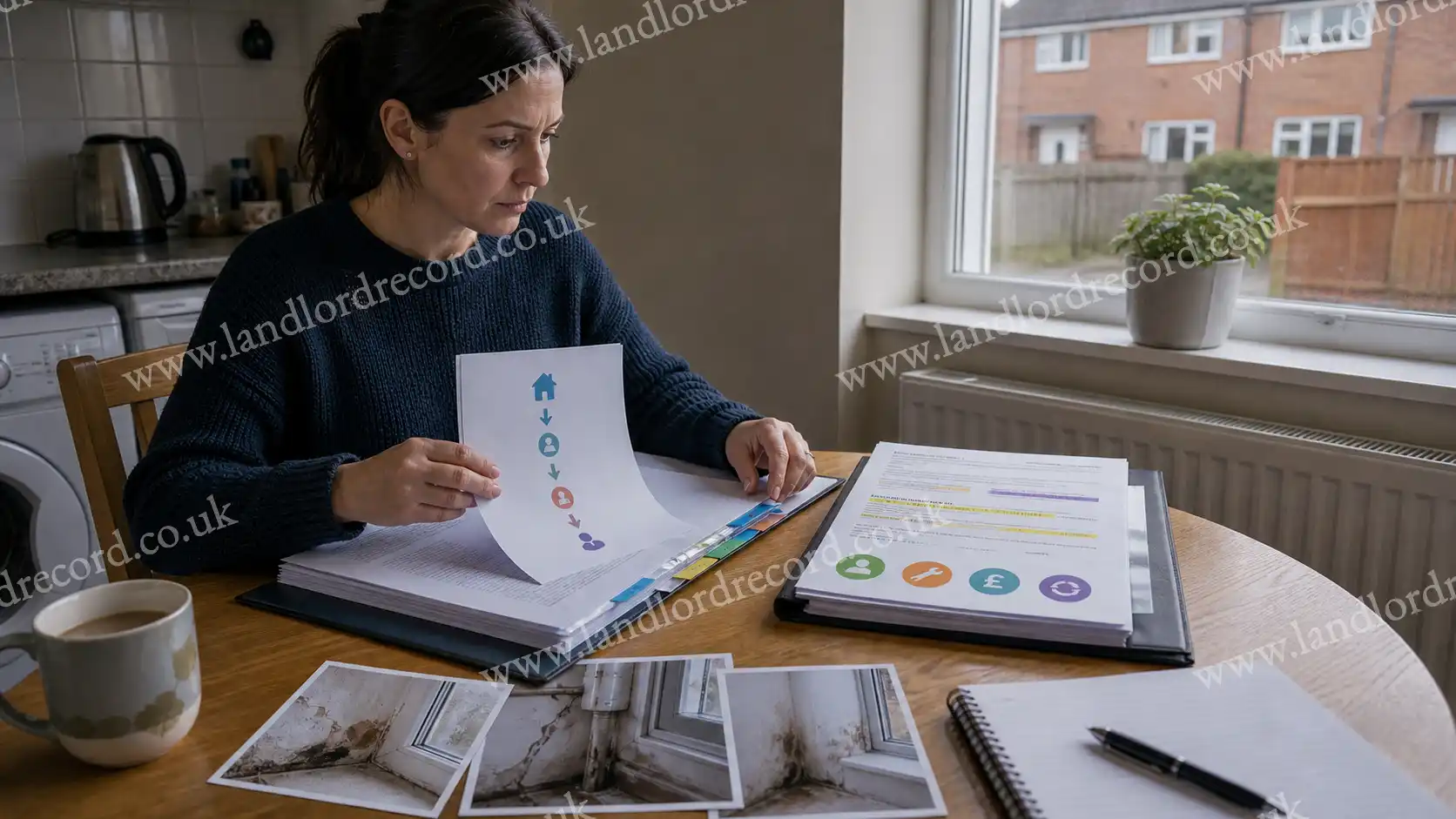
The Housing Ombudsman Service is a free, independent dispute-resolution body for social housing residents in England. Established under the Housing Act 1996, it investigates complaints about member landlords — mainly housing associations and local authorities — and has the power to order remedies when it finds that a landlord has got things wrong. If your landlord is a member of the scheme and you believe it has mishandled your complaint, you can ask the Ombudsman to step in once you have exhausted the landlord's own process.
Our index currently holds 18,064 published determinations, including 2,441 findings of severe maladministration — evidence of both the volume of disputes the Ombudsman resolves and the seriousness of the failings it identifies. This guide explains exactly how the process works, what you can expect at each stage, and how to use the published decisions to understand what might happen in your case.
Who can complain and when you can escalate
You can bring a complaint to the Housing Ombudsman if you are a resident of a social landlord that is a member of the scheme. This includes assured tenants, secure tenants, leaseholders, shared owners, and in some cases former residents who are complaining about events during their tenancy. You can also ask a representative — such as a family member, advocate, or adviser — to submit the complaint on your behalf, provided the Ombudsman has your consent to discuss your case with them.
The vast majority of social landlords in England are members of the scheme. Membership is a requirement for most providers of social housing, so if you rent from a housing association or council landlord, it is almost certainly covered. You can check the membership list on the Housing Ombudsman website if you are unsure.
Before the Ombudsman will investigate, you normally need to exhaust your landlord's own complaints process first. This means giving the landlord a fair opportunity to respond to your complaint through its formal procedure. The landlord must handle complaints in line with the Ombudsman's Complaint Handling Code, which sets out two formal stages — Stage 1 and Stage 2 — plus a "self-resolution" stage where the landlord can try to put things right quickly. The Code also requires landlords to acknowledge complaints promptly and to keep residents informed of progress.
If the landlord does not provide a final response within eight weeks of your complaint being logged, or if you are unhappy with its final response, you can escalate to the Ombudsman. You no longer need to go through a designated person or Member of Parliament first — the rules were changed so you can submit your complaint directly. This eight-week rule is important: it protects residents from landlords that delay or ignore complaints indefinitely.
There are some clear limits to the Ombudsman's jurisdiction. It cannot investigate matters that are the subject of live court proceedings, that fall to another body (such as the police, the Regulator of Social Housing, or the First-tier Tribunal), or that are outside the Ombudsman's Scheme. It also will not usually investigate a complaint that has already been determined, unless there is new evidence. If you are unsure whether your complaint qualifies, the Ombudsman's website provides an eligibility checker and detailed guidance.
The step-by-step process
The complaints journey follows six clear stages. Treating each stage carefully improves your chances of a well-documented case and a timely outcome. The process is designed to be accessible without legal representation, though you are welcome to seek advice.
-
Complain to your landlord formally
Start by using your landlord's own complaints procedure. Put your complaint in writing, keep copies of everything, and ask the landlord to log it as a formal complaint so it follows the Ombudsman's Complaint Handling Code. Be specific about what went wrong, when it happened, and what you want the landlord to do to put things right. Keep a timeline of events and save any photos, emails, or letters that support your case.
-
Allow the landlord to respond
Landlords must handle complaints in line with the Complaint Handling Code. Stage 1 complaints should normally be acknowledged within five working days and responded to within ten working days. Stage 2 complaints should be acknowledged within five working days and responded to within 20 working days. If you do not receive a final response within eight weeks of making your complaint, you can escalate to the Ombudsman without waiting for the landlord to close its process. Note the dates of every response so you can show the timeline clearly.
-
Escalate to the Housing Ombudsman
If you are unhappy with the landlord's final response, or it has not responded within a reasonable time, you can bring your complaint to the Housing Ombudsman directly. You no longer need to contact a designated person or Member of Parliament first. You can submit your complaint online through the Ombudsman's website. You will need to provide copies of your correspondence with the landlord and explain why you believe the landlord got things wrong.
-
The Ombudsman assesses jurisdiction
The Ombudsman first checks that your complaint is within its jurisdiction. It can investigate complaints about how a member landlord has dealt with a matter relating to your home or tenancy. It cannot investigate issues that are the subject of live court proceedings, that fall to another body such as the police or the Regulator of Social Housing, or that are outside the Ombudsman's Scheme. If the complaint is not accepted, the Ombudsman will explain why and may signpost you to the right body.
-
Investigation and determination
If the complaint is accepted, the Ombudsman gathers evidence from both you and the landlord. It may request documents, timelines, and explanations. It then reaches a determination on each part of the complaint — each "complaint head". The outcome can be no maladministration, maladministration, partial maladministration, or severe maladministration. The Ombudsman also decides what orders, if any, the landlord must follow, and sets deadlines for compliance.
-
Orders and compliance
Where the Ombudsman finds maladministration, it issues orders the landlord must comply with. These can include an apology to the resident, financial compensation, completing outstanding repairs or other specific actions, reviewing a policy, changing a process, and staff training. The Ombudsman monitors whether the landlord complies with its orders and can take further action if the landlord fails to do so. Determinations are published under the Open Government Licence.
What the Ombudsman can order
When the Ombudsman completes its investigation, it issues a determination — a formal written decision on each part of the complaint. The determination sets out the background, the evidence considered, the Ombudsman's assessment, and the outcome for each "complaint head". The possible outcomes are:
- No maladministration — the landlord acted reasonably and in line with its obligations. The Ombudsman found no failing in how the landlord handled that part of the complaint.
- Maladministration — the landlord failed to meet its obligations and that failure adversely affected the resident. The Ombudsman typically orders the landlord to put things right.
- Partial maladministration — there was a failing, but it was more limited in scope or impact. For example, the landlord may have got some things right and some things wrong, or the impact on the resident was lower.
- Severe maladministration — the most serious finding, reserved for prolonged failures, repeated failings across a complaint, or a significant adverse impact on the resident. It usually attracts the strongest orders and the highest compensation.
Where the Ombudsman finds maladministration (including partial or severe), it makes orders that the landlord must comply with. These orders are not suggestions — the Ombudsman monitors compliance and can take further action if the landlord fails to follow them. Common orders include:
- An apology to the resident, sometimes at a senior level.
- Financial compensation, calculated under the Ombudsman's remedies guidance. The amount reflects the severity and duration of the failing and the impact on the resident.
- Completing outstanding repairs or taking other specific action.
- Reviewing a policy or procedure to prevent the same failing happening again.
- Changing a process to improve how the landlord handles similar complaints.
- Staff training to address identified weaknesses.
Compensation is not automatic and there is no fixed tariff. The Ombudsman weighs several factors: how serious the failing was, how long it lasted, the distress and inconvenience caused, and whether the landlord had already recognised the failing and offered a fair remedy. Across the published determinations in our index, the Housing Ombudsman has ordered a total of £8,590,043 in compensation. The median award is £450, with individual awards ranging from £9 to £358,282. These figures are indicative of past published cases only and do not predict any individual outcome. For a fuller explanation, see our guide to Housing Ombudsman compensation.
You can also see which landlords have the most serious findings by exploring the severe maladministration league table.
How to read your determination
A determination is the Ombudsman's final written decision. It is structured so that both residents and landlords can follow the reasoning clearly. Most determinations contain the following sections:
- Summary — a brief overview of the complaint, the landlord, and the overall outcome.
- Background — the chronology of events, including the resident's complaint and the landlord's responses.
- Jurisdiction — confirmation that the complaint is within the Ombudsman's remit and that the resident has exhausted the landlord's process.
- Assessment — the Ombudsman's analysis of each complaint head, including what the landlord did, what it should have done, and whether there was a failing.
- Outcome — the formal finding for each complaint head (no maladministration, maladministration, partial, or severe).
- Orders — what the landlord must do, by when, and any compensation amount.
Each determination is assigned a case reference (for example, a year and number) and a publication date. You can search determinations by landlord, date, category, or keyword. Reading a few determinations that involve complaints similar to yours can help you understand how the Ombudsman applies its guidance in practice.
If you want to see how determinations are structured, you can browse real published decisions in our decisions database or read our guide to maladministration findings for a plain-English explanation of the outcomes and what they mean.
Tips that strengthen your complaint
A well-prepared complaint is easier for the Ombudsman to assess and can lead to a quicker resolution. These practical tips can help:
- Put everything in writing and keep dated copies of all correspondence, photos, repair reports, and medical evidence.
- Be specific: state exactly what went wrong, the dates it happened, and how it affected you or your household.
- Say clearly what remedy you want — for example, a repair, an apology, reimbursement of costs, or compensation.
- Note the landlord's response dates so you can show when the process was exhausted or when the eight-week point was reached.
- Include any evidence that the landlord breached its own policies or the Complaint Handling Code.
- Keep your submissions concise and focused on the facts. The Ombudsman needs evidence, not opinion.
- If the landlord offers a remedy during the process, consider whether it is fair before rejecting it outright — the Ombudsman will take account of any reasonable offer.
Where to get free help
If you would like support with your complaint, free advice is available from Citizens Advice, Shelter, and your local law centre. Some housing associations also have resident panels or independent advisers who can help you draft your complaint. This guide is an information resource and does not constitute legal advice. If your situation involves complex legal rights — for example, disrepair claims that might be better suited to court — you should speak to a solicitor or legal adviser.
Our index holds 18,064 published determinations from social landlords across England, including 2,441 findings of severe maladministration. Search the decisions or browse the league tables. — Landlord Record analysis of Housing Ombudsman decisions (OGL v3.0)
Frequently asked questions
Frequently asked questions
Is it worth complaining to the Housing Ombudsman?
Yes, if you have exhausted your landlord's complaints process and believe the landlord handled your complaint unfairly. The Ombudsman is a free, independent service with the power to order landlords to apologise, pay compensation, and take corrective action. In our index of published determinations, it has found severe maladministration in 2,441 cases, demonstrating that serious failings are identified and landlords are held to account. While the Ombudsman cannot guarantee a particular outcome, it provides a formal, no-cost route to have an independent body investigate your complaint.
How long does an ombudsman decision take?
There is no fixed statutory timescale that applies to every case. The Ombudsman aims to resolve complaints as efficiently as possible, but the length of an investigation depends on its complexity, how quickly both parties provide evidence, and whether the case is suitable for early resolution. Straightforward complaints may be determined in a matter of weeks, while complex cases involving multiple complaint heads or extensive evidence can take several months. You can check the status of your complaint through the Ombudsman's online portal, and the Ombudsman will keep you informed of progress.
Are ombudsman decisions public?
Yes. The Housing Ombudsman publishes its determinations on its own website under the Open Government Licence v3.0. This means anyone can read them. Landlord Record organises and analyses these published decisions so residents, landlords, and advisers can search, filter, and compare them more easily. You can browse real determinations in our <a href="/decisions" class="link-underline">decisions database</a> or on the Housing Ombudsman's website directly.
What complaints does the Housing Ombudsman deal with?
The Ombudsman deals with complaints about how a member landlord has handled a matter relating to your home or tenancy. Common subjects include responsive repairs, damp and mould, anti-social behaviour, service charges, estate management, tenancy administration, and the landlord's own complaints handling. It does not deal with issues outside its jurisdiction — for example, live court proceedings, criminal matters for the police, or complaints about private landlords who are not members of the scheme. If you are unsure, the Ombudsman's eligibility checker can help.
Can the Housing Ombudsman award compensation?
Yes. The Ombudsman can order financial compensation as one of several remedies. Compensation is not automatic and there is no fixed tariff; the Ombudsman applies its published remedies guidance and weighs the severity and duration of the failing and the impact on the resident, including distress, inconvenience, time and trouble. Across the published determinations in our index, the Housing Ombudsman has ordered a total of £8,590,043 in compensation. The median award is £450, with individual awards ranging from £9 to £358,282. See our <a href="/guides/housing-disrepair-compensation" class="link-underline">guide to Housing Ombudsman compensation</a> for a detailed explanation.
What happens after an ombudsman decision?
After the Ombudsman issues a determination, the landlord must comply with any orders within the timeframe specified. Orders can include an apology, compensation, completing repairs or other specific actions, reviewing a policy, changing a process, or staff training. The Ombudsman actively monitors compliance and publishes whether the landlord has complied. If the landlord fails to comply, the Ombudsman can escalate the matter publicly and report the non-compliance. As the resident, you do not usually need to take further action unless the landlord does not comply, in which case you should contact the Ombudsman.