Guide
Designated Persons & MP Referrals to the Ombudsman
What a designated person is, who counts, how the referral route works, and why you no longer need one to reach the Housing Ombudsman.
Reviewed against Housing Ombudsman published guidance.
Landlord Record is independent and is not affiliated with, or endorsed by, the Housing Ombudsman Service. We organise and analyse decisions published under the Open Government Licence.
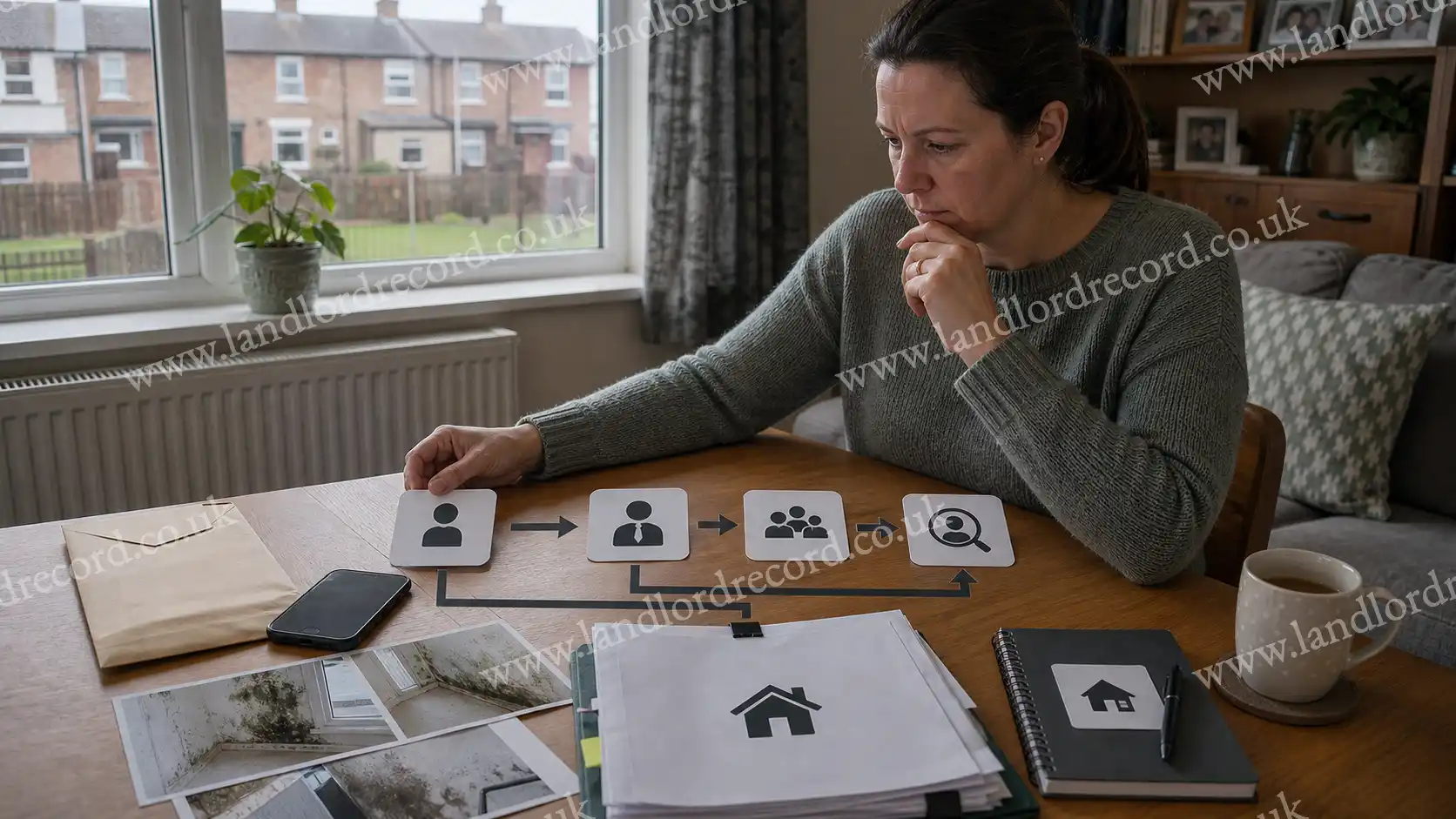
A designated person is someone who can refer a housing complaint to the Housing Ombudsman on your behalf. In the past, this was a mandatory step: you could not reach the Ombudsman until an MP, local councillor, or tenant panel had reviewed your case and agreed to pass it on. That changed in 2023. Residents can now go directly to the Ombudsman once they have exhausted their landlord\'s complaints process — no designated person required.
The designated-person route still exists, and it can still be a powerful tool. An MP or councillor who refers your complaint can also lobby your landlord, apply political pressure, and help you navigate the system. But it is no longer a gate you must pass through. Understanding both routes — direct and via a designated person — lets you choose the one that best suits your situation.
Who counts as a designated person
The Housing Ombudsman Scheme recognises three categories of designated person. Any one of them can refer a complaint if they believe the landlord has not handled it fairly:
- Member of Parliament (MP) — Your constituency MP can review your complaint and refer it to the Ombudsman. Many MPs have caseworkers who handle housing issues regularly. An MP\'s referral often carries weight because the landlord knows the complaint is being watched at a parliamentary level.
- Local councillor — A councillor for your ward can act as a designated person. Councillors often have strong relationships with council landlords and can escalate complaints within the local authority as well as to the Ombudsman. Some councils have dedicated housing caseworkers who support councillors with these referrals.
- Designated tenant panel — This is a formally recognised group of residents that represents tenants\' interests to the landlord. Not every landlord has one, and tenant panels are more common in larger housing associations. If your landlord does have a panel, its members can refer complaints to the Ombudsman after reviewing the evidence.
Only these three categories count. A friend, family member, solicitor, or citizens advice worker cannot act as a designated person unless they also fall into one of the categories above. They can, of course, help you prepare your complaint and support you through the process.
How the referral route works
Whether you go direct or through a designated person, the starting point is the same: you must first exhaust your landlord\'s own complaints process. That means giving the landlord a fair chance to respond through its formal procedure, which must follow the Ombudsman\'s Complaint Handling Code. The Code sets out time limits for responses and requires landlords to keep residents informed of progress.
If you choose the designated-person route, the process looks like this:
- Complain to your landlord — Put your complaint in writing, keep copies, and ask for it to be logged as a formal complaint. Allow the landlord to reach its final response.
- Contact a designated person — Reach out to your MP, a local councillor, or your tenant panel. Provide them with a clear summary, a timeline, and copies of your correspondence with the landlord.
- The designated person reviews your case — They will consider whether the landlord has acted fairly and whether the complaint warrants independent investigation. They are not obliged to refer every complaint they receive.
- Referral to the Ombudsman — If the designated person agrees, they submit the complaint to the Housing Ombudsman. The Ombudsman then assesses jurisdiction and, if the complaint is accepted, begins its investigation.
The direct route skips steps 2 and 3. Once you have a final response — or eight weeks have passed without one — you can submit the complaint yourself through the Ombudsman\'s online portal. You will need to upload copies of your correspondence and explain why you believe the landlord got things wrong. See our guide to complaining to the Housing Ombudsman for a full walkthrough.
What changed in 2023
Before 2023, the Housing Ombudsman Scheme required most residents to have their complaint referred by a designated person. This was intended to ensure that local representatives could help resolve disputes before they reached the Ombudsman, and to filter out complaints that were not ready for independent investigation. In practice, it often caused delays and confusion: residents struggled to find a designated person willing to refer their complaint, and some MPs and councillors were unfamiliar with the role.
The Ombudsman reformed the system so that residents could bring complaints directly. The change was designed to make the service more accessible, reduce unnecessary barriers, and speed up the process for residents who had already waited weeks or months for their landlord to respond. At the same time, the Ombudsman kept the designated-person route open for residents who wanted the support of an MP, councillor, or tenant panel.
The reform also aligned with wider government efforts to strengthen resident voice in social housing, including the introduction of Awaab\'s Law and updated expectations around complaints handling. The message from the Ombudsman was clear: residents should have a straightforward, no-cost route to independent redress.
When to use a designated person or MP referral
Because the direct route is now available, you might wonder whether there is any point in involving a designated person. There are several situations where it can still be valuable:
- You want political leverage — An MP or councillor who takes up your case can write to the landlord directly, ask questions in council or parliament, and keep the issue on the public record. This can be especially effective if the landlord is a local authority that is accountable to elected representatives.
- You need help navigating the process — If you are unsure how to frame your complaint, what evidence to gather, or whether your case is strong enough, a designated person\'s office may be able to guide you. MP caseworkers and council housing officers often have experience with Ombudsman complaints.
- The complaint affects multiple residents — If several households in your block or estate are experiencing the same failing — for example, widespread damp and mould, repeated anti-social behaviour, or poor estate management — a designated person may be more willing to refer a collective complaint or raise the issue as a systemic concern.
- The landlord is ignoring you — If the landlord has not responded to your complaint at all, a letter from an MP or councillor can sometimes prompt action where your own correspondence has failed.
On the other hand, if you are confident in presenting your own case and want the fastest possible route to the Ombudsman, going direct is usually quicker. There is no waiting for a designated person to review your complaint, and you control the timeline. Our guide to complaining about your housing association explains how to prepare a strong complaint from the start.
What happens after a referral
Once a complaint reaches the Housing Ombudsman — whether by direct submission or designated-person referral — the process is the same. The Ombudsman first checks that the complaint is within its Scheme: that the landlord is a member, that the issue relates to your home or tenancy, and that you have exhausted the landlord\'s process (or that eight weeks have passed). It then gathers evidence from both parties and reaches a determination on each part of the complaint.
The Ombudsman can find no maladministration, maladministration, partial maladministration, or severe maladministration. Where it finds a failing, it issues orders the landlord must comply with — these can include an apology, compensation, completing repairs, reviewing a policy, and staff training. The Ombudsman monitors compliance and can escalate publicly if the landlord fails to act.
If you are wondering whether a complaint is likely to succeed, it is worth reading published determinations that involve complaints similar to yours. Our guide to whether it is worth complaining sets out what the data shows about outcomes and how to interpret them.
Our index currently holds 18,064 published determinations from social landlords across England, including 2,441 findings of severe maladministration. Search the decisions or browse the league tables. — Landlord Record analysis of Housing Ombudsman decisions (OGL v3.0)
Frequently asked questions
Frequently asked questions
What is a designated person in a housing complaint?
A designated person is an individual or body who can refer a housing complaint to the Housing Ombudsman on behalf of a resident. The role was created so that residents had a supported route to escalate their complaint if they were unhappy with their landlord's final response. A designated person acts as a gateway — they review the complaint and, if they agree it warrants independent investigation, they send it to the Ombudsman.
Can my MP refer my complaint to the Housing Ombudsman?
Yes. A Member of Parliament is one of the categories of designated person who can refer a complaint to the Housing Ombudsman. If your MP agrees that your landlord has not resolved your complaint fairly, they can make the referral on your behalf. Many residents find this route helpful because an MP's office can also write to the landlord directly and apply political pressure while the complaint is being considered.
Do I still need a designated person?
No. Since rule changes introduced by the Housing Ombudsman in 2023, residents no longer need to go through a designated person to bring a complaint. You can submit your complaint directly to the Ombudsman once you have exhausted your landlord's own complaints process. The designated-person route still exists and remains useful, but it is no longer a mandatory step.
Who can be a designated person?
The Housing Ombudsman Scheme recognises three types of designated person: a Member of Parliament (MP), a local councillor, and a designated tenant panel. A tenant panel is a group of residents that the landlord has formally recognised to represent tenants' interests. Any of these three can refer a complaint to the Ombudsman if they believe the landlord has not handled it properly.
How do I get my councillor to refer my complaint?
Contact your local ward councillor and explain that you have exhausted your landlord's complaints process and believe the outcome is unfair. Provide them with a clear timeline, copies of your correspondence with the landlord, and a summary of what you think went wrong. If the councillor agrees that the complaint warrants independent investigation, they can refer it to the Housing Ombudsman. Some councils have housing caseworkers who specialise in these enquiries.
Can I go to the Ombudsman directly?
Yes. Since 2023, social housing residents in England can bring a complaint directly to the Housing Ombudsman without first asking a designated person or MP to refer it. You simply need to show that you have exhausted your landlord's own complaints process, or that eight weeks have passed since you made your complaint without a final response. You can submit your complaint online through the Ombudsman's website.