Guide
Homes (Fitness for Human Habitation) Act: Your Rights
A plain-English guide to what the Homes (Fitness for Human Habitation) Act 2018 means for tenants, how to use it, and how it fits with the Housing Ombudsman and Awaab's Law.
By the Landlord Record research team · Reviewed against Housing Ombudsman published guidance · Last updated 30 May 2026
The Homes (Fitness for Human Habitation) Act 2018 gives tenants in England the right to a home that is safe, healthy and free from serious hazards. If your landlord lets a property that is not fit for human habitation, the Act allows you to take direct court action for repairs and compensation. It applies to social housing tenants and most private tenants.
In practice, one of the most common fitness issues is damp and mould. Our analysis of published Housing Ombudsman decisions shows that damp and mould appears in 6,165 determinations. — Landlord Record analysis of Housing Ombudsman decisions (OGL v3.0)
What "fit for human habitation" means
The Act does not give a single checklist. Instead, it says a property is unfit if it has defects or hazards that pose a real risk to the health or safety of occupants. The law imports the 29 hazards from the Housing Health and Safety Rating System (HHSRS), which was originally used by environmental health officers to assess housing conditions.
These 29 hazards include:
- Damp and mould growth — including penetrating damp, rising damp, and condensation-related mould that affects health.
- Excess cold and heat — inadequate heating or insulation that threatens health, or dangerous overheating.
- Biological and chemical hazards — including asbestos, carbon monoxide, lead, radiation, and uncombusted fuel gas.
- Physical safety hazards — including falls on stairs or level surfaces, fire, electrical hazards, structural collapse, explosions, and entrapment.
- Hygiene, sanitation and water supply — including lack of clean water, poor drainage, pests, food safety risks, and inadequate refuse disposal.
- Space and security — including overcrowding, entry by intruders, and lighting.
- Noise and collision hazards — including noise pollution and risks of physical injury from layout or fittings.
A minor issue — a small crack in plaster, a loose door handle, or slight condensation on a cold morning — does not make a home unfit. The hazard must be serious enough that it could genuinely harm the health or safety of a reasonable occupant. Vulnerability matters: children, older people, pregnant women, and those with respiratory conditions or weakened immune systems are considered when assessing risk.
How to use the Fitness Act
The Act gives you a direct legal right against your landlord. You do not need permission from a regulator or the Housing Ombudsman to use it. The process is:
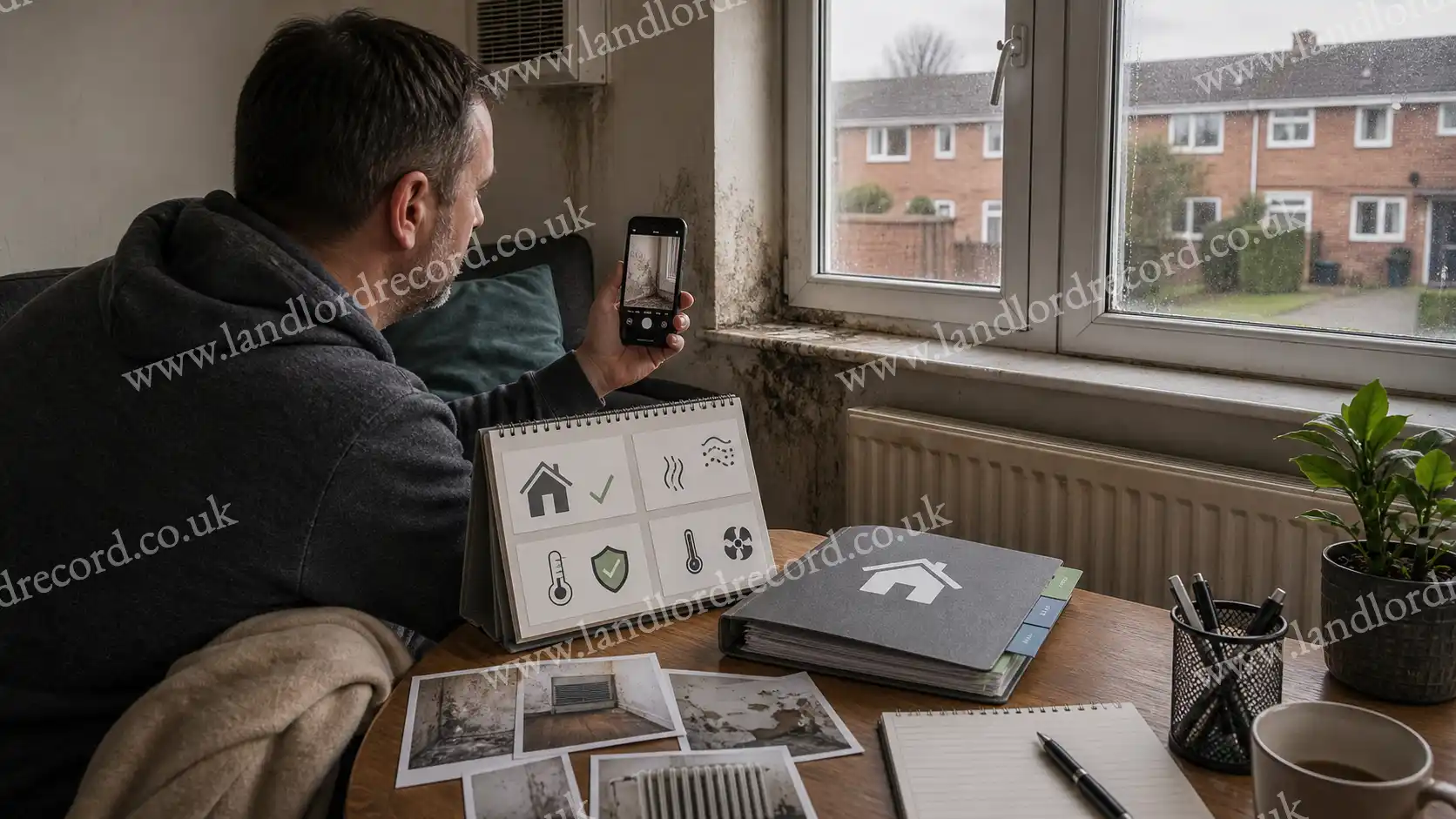
- Report the problem to your landlord in writing. Keep a copy. Photos, videos, dated repair reports, and emails all strengthen your case. If the hazard affects your health, keep medical records too.
- Give your landlord a reasonable time to respond. What is reasonable depends on the severity. An emergency hazard — such as a dangerous electrical fault or severe structural damage — should be addressed immediately. Serious damp or mould should be investigated promptly; under Awaab's Law, social landlords must investigate significant damp and mould within 10 working days.
- If the landlord fails to act, consider court action. You can issue a claim in the county court under the Fitness Act. The court can order specific repairs and award compensation for the period the home was unfit.
You can also complain to the Housing Ombudsman if you are a social housing tenant and your landlord is a member. The Ombudsman cannot enforce the Fitness Act directly — it is a court remedy — but it can find maladministration where a landlord has failed to meet its repair or fitness obligations, and it can order compensation, repairs, apologies and policy changes.
How the Fitness Act interacts with the Ombudsman and Awaab's Law
The Fitness Act, the Housing Ombudsman, and Awaab's Law are separate but overlapping tools. Understanding which to use — and when — helps you get the right outcome.
The Housing Ombudsman is a free, independent dispute-resolution service for social housing tenants. It looks at whether the landlord handled your complaint properly and met its obligations. If the Ombudsman finds maladministration, it can order compensation and other remedies. It does not decide whether your home is legally unfit — that is a court question — but its findings about damp, heating, repairs and complaint handling can support a court claim.
Awaab's Law, introduced under the Social Housing (Regulation) Act 2023, adds fixed timescales for social landlords dealing with significant damp and mould. From 27 October 2025, landlords must investigate within 10 working days and make the property safe within 5 working days of the investigation finishing. Awaab's Law does not replace the Fitness Act; it strengthens it by making specific timescales enforceable through the courts and the Ombudsman. See our Awaab's Law explained guide for full details.
The Decent Homes Standard is another related standard, but it is mainly a stock-condition target for social landlords rather than a direct tenant right. The Fitness Act gives you a personal cause of action that the Decent Homes Standard does not. Read our Decent Homes Standard explained guide for the differences.
What the data shows about fitness and damp
Landlord Record analyses published Housing Ombudsman decisions to understand how fitness issues show up in complaints. Damp and mould is the most visible fitness-related theme in the data.
Damp and mould appears in 6,165 published determinations in our index. — Landlord Record analysis of Housing Ombudsman decisions (OGL v3.0)
Where the Ombudsman has ordered compensation in cases involving damp and mould, the median award is £700 across 4,206 decisions. The middle range is £350 to £1,300 . The largest single award is £358,282. — Landlord Record analysis of Housing Ombudsman decisions (OGL v3.0)
| Metric | Value |
|---|---|
| Decisions with compensation | 4,206 |
| Median award | £700 |
| Middle 50% range | £350 – £1,300 |
| Average award | £1,195 |
| Largest award | £358,282 |
These figures are indicative. The Ombudsman does not use a fixed tariff; it weighs severity, duration, evidence and impact. A short delay with minor damp attracts a different remedy from months of unresolved black mould affecting a child's bedroom. You can explore which landlords have the most adverse findings for damp and mould in our worst damp and mould rankings. For a broader view of disrepair compensation, see our housing disrepair compensation guide.
Fitness issues also appear under other complaint categories. Health and safety decisions often involve hazards that make a home unfit, such as unsafe electrics, fire risks, or structural defects.
Our index currently holds 18,064 published determinations. Search the decisions or browse landlord records.
Sources
The legal framework described here comes from the Homes (Fitness for Human Habitation) Act 2018 and the Landlord and Tenant Act 1985, section 11 . The 29 hazards are defined in the HHSRS guidance published by the Department for Levelling Up, Housing and Communities.
For the Housing Ombudsman's approach to repairs, damp and compensation, see the Housing Ombudsman website . For Awaab's Law timescales and enforcement, see GOV.UK guidance for tenants .
This page is an information resource and does not constitute legal advice. Landlord Record is independent and is not affiliated with, or endorsed by, the Housing Ombudsman Service. We organise and analyse decisions published under the Open Government Licence.
Frequently asked questions
What is the Homes (Fitness for Human Habitation) Act?
The Homes (Fitness for Human Habitation) Act 2018 is a UK law that requires landlords to make sure rented homes are fit for human habitation at the beginning of the tenancy and throughout. It applies to social and private tenants in England. If your home has serious hazards — such as severe damp, mould, excess cold, structural defects or unsafe electrics — that make it unfit, your landlord must put them right. If they do not, you can take them to court.
What makes a home unfit for human habitation?
A home is unfit if it has hazards that pose a real risk to health or safety. The Act uses the 29 hazards from the Housing Health and Safety Rating System (HHSRS). These include damp and mould, excess cold, overcrowding, unsafe electrics, structural collapse, fire risks, poor sanitation, and lack of ventilation. Not every minor defect makes a home unfit — the hazard must be serious enough to affect the health or safety of occupants.
Can I take my landlord to court under the Fitness Act?
Yes. If your landlord fails to make your home fit for human habitation after you have reported a serious hazard, you can bring a claim in the county court. You do not need to go through the Housing Ombudsman first. The court can order the landlord to carry out repairs and award you compensation for the period the home was unfit. You should keep evidence of the hazard, your reports to the landlord, and any impact on your health or living conditions.
Does the Fitness Act cover damp and mould?
Yes. Damp and mould are explicitly covered as Category 1 hazards under the HHSRS, which the Fitness Act incorporates. If severe damp or mould makes your home unfit — for example by causing respiratory problems, damaging belongings, or making rooms unusable — your landlord is in breach of the Act. Social landlords must also meet the stricter timescales under Awaab's Law for investigating and repairing significant damp and mould.
How is it different from the Decent Homes Standard?
The Decent Homes Standard is a target set by government for social housing providers. It says a home should be free from serious hazards, in a reasonable state of repair, have reasonably modern facilities, and efficient heating and insulation. The Homes (Fitness for Human Habitation) Act 2018 is a legal obligation that applies to both social and private landlords. While the Decent Homes Standard is mainly used for stock-condition monitoring and regulatory enforcement, the Fitness Act gives individual tenants a direct right to take their landlord to court.
Can I claim compensation under the Fitness Act?
Yes. If your landlord breaches the Act and your home is unfit, a court can award you compensation. The amount typically reflects the reduction in the value of your tenancy during the period the home was unfit, plus any damage to belongings or health impacts. The Housing Ombudsman can also order compensation where it finds maladministration related to fitness issues such as damp, heating failure or repair delays. See our housing disrepair compensation guide for more detail.