Guide
Damp & Mould Compensation: What the Ombudsman Awards
A data-led guide to typical Housing Ombudsman compensation for damp and mould, what affects the amount, and how to estimate your own case.
By the Landlord Record research team
Independent analysis of published Housing Ombudsman decisions. Reviewed against Housing Ombudsman published guidance. Last updated: 30 May 2026.
This is general information, not legal advice.
Landlord Record is independent and is not affiliated with, or endorsed by, the Housing Ombudsman Service. We organise and analyse decisions published under the Open Government Licence.
In the current Landlord Record dataset, the typical Housing Ombudsman compensation award for damp and mould is £700, with a middle range of £350 to £1,300 across 4,206 published decisions that include compensation. That is a benchmark, not a promise — the Ombudsman decides each case on its own facts.
Our index currently holds 18,064 Housing Ombudsman decisions across 625 landlords. Damp and mould appears in 6,165 published decisions, making it one of the most common issues raised in complaints. Landlord Record analysis of Housing Ombudsman decisions (Open Government Licence v3.0).
Damp and mould is one of the most distressing problems a tenant can face. It can damage belongings, make rooms unusable, aggravate respiratory conditions, and undermine the sense that your home is safe. When a social landlord fails to act, the Housing Ombudsman can step in — and compensation is one of the remedies it can order. But the amount is not fixed. It depends on what went wrong, how long it went on, what evidence you have, and how seriously you were affected.
The issue has received renewed attention following the inquest into the death of Awaab Ishak, which highlighted the dangers of prolonged exposure to damp and mould in social housing. While compensation cannot undo harm, the Ombudsman's awards reflect the seriousness of these failures when they are evidenced. See our guide to Awaab's Law explained for more on the proposed changes to damp and mould response times.
Use these figures as an indicative guide only. A short delay with a minor patch of damp is treated very differently from months of unresolved black mould, repeated failed repairs, poor communication, or evidence that your health or use of the home was seriously affected. The Ombudsman weighs severity, duration, impact and evidence — not just the label on the complaint.
What the Housing Ombudsman actually awards for damp and mould
The table below shows real compensation distribution by issue tag. Damp and mould sits alongside other common disrepair issues such as repairs delay, heating and hot water failure, and leaks. A single decision can involve more than one issue, so rows should not be added together. The median (the middle award) is usually the best quick benchmark because a small number of very high awards can pull the average upwards.
The "middle range" shows the 25th to 75th percentile — in other words, the range within which half of all awards fall. If your case is relatively straightforward, you should expect to sit somewhere inside that band rather than at the top.
| Issue | Typical award | Middle range | Decisions |
|---|---|---|---|
| Complaint handling delay | £500 | £250 to £950 | 8,676 |
| Repairs delay | £550 | £250 to £1,000 | 8,323 |
| Communication failure | £500 | £250 to £900 | 7,219 |
| Leak water ingress | £680 | £300 to £1,200 | 4,384 |
| Damp and mould | £700 | £350 to £1,300 | 4,206 |
| Record keeping | £600 | £300 to £1,050 | 4,000 |
| Window repair | £600 | £300 to £1,200 | 3,099 |
| Door repair | £450 | £200 to £800 | 3,016 |
| Asb | £400 | £200 to £825 | 2,559 |
| Heating hot water | £550 | £250 to £1,132 | 2,448 |
| Roof repair | £500 | £250 to £1,000 | 2,275 |
| Service charge | £350 | £175 to £690 | 1,405 |
| Kitchen repair | £410 | £200 to £800 | 1,309 |
| Disrepair | £700 | £350 to £1,450 | 1,286 |
| Decant | £933 | £450 to £2,000 | 1,204 |
| Garden maintenance | £350 | £175 to £650 | 1,167 |
| Bathroom repair | £450 | £200 to £800 | 1,073 |
| Wall repair | £400 | £200 to £750 | 1,047 |
| Lift failure | £500 | £250 to £1,002 | 979 |
| Carpet damage | £480 | £226 to £900 | 882 |
| Flooring damage | £500 | £227 to £850 | 864 |
| Stair repair | £350 | £200 to £650 | 726 |
| Fence repair | £300 | £150 to £600 | 600 |
| Asbestos | £500 | £250 to £1,000 | 530 |
| Insulation | £450 | £200 to £850 | 505 |
| Pest control | £420 | £200 to £815 | 442 |
| Ventilation | £500 | £240 to £900 | 432 |
| Balcony repair | £450 | £200 to £750 | 212 |
| Vulnerability | £690 | £400 to £1,091 | 96 |
| Vulnerable resident | £650 | £400 to £1,200 | 93 |
| Communication | £350 | £125 to £632 | 91 |
| Complaint handling | £250 | £112 to £500 | 82 |
| Risk assessment | £450 | £250 to £638 | 67 |
| Garage repair | £250 | £100 to £355 | 63 |
| Pest infestation | £600 | £262 to £1,075 | 59 |
| Compensation | £350 | £200 to £642 | 55 |
| Noise nuisance | £300 | £150 to £450 | 51 |
| Temporary accommodation | £808 | £600 to £1,638 | 36 |
| Staff conduct | £325 | £150 to £495 | 35 |
| Missed appointments | £588 | £375 to £1,069 | 30 |
| Windows | £738 | £412 to £1,488 | 30 |
Source: Landlord Record analysis of Housing Ombudsman decisions (Open Government Licence v3.0).
For damp and mould specifically, compare your case to the damp-and-mould row, but also consider whether the complaint involves broader responsive-repairs failings. Across all responsive-repairs compensation decisions in the dataset, the median award is £500 across 10,945 decisions. A damp complaint may also include repairs delay, heating failure, poor complaint handling or missed appointments — each of which can affect the total remedy. The Ombudsman looks at the whole picture, not just the damp itself.
Do not treat the highest award as a realistic starting point. High outliers usually reflect unusual facts, several linked failures, serious health impact, or a very long period before the problem was resolved. The average can be skewed upwards by those outliers. For most readers asking "how much compensation can I get for damp and mould?", the median and middle range are more useful than the maximum.
What affects the amount
The Housing Ombudsman does not use a fixed tariff or formula for damp and mould compensation. Instead, it applies its published remedies guidance and weighs the individual circumstances of each case. The main factors are set out below.
Severity of the damp or mould
A small patch of condensation is treated very differently from widespread black mould across several rooms, structural penetrating damp, or recurring leaks that the landlord has failed to repair.
Duration
How long the problem lasted and how long you were affected. Prolonged failures — especially where the landlord had notice but did not act — tend to attract higher remedies.
Evidence you keep
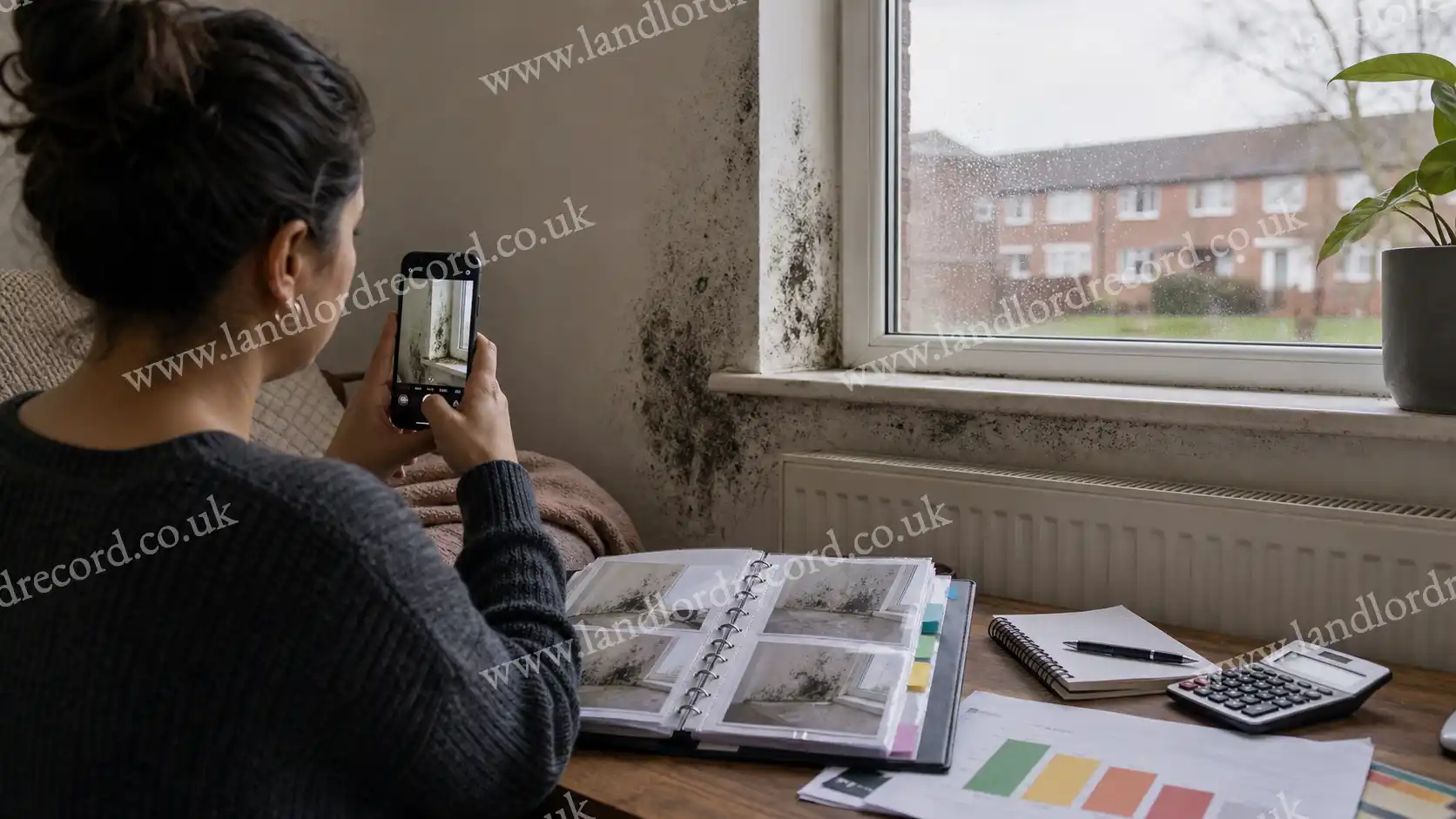
Photographs, dated repair reports, complaint emails, inspection notes and medical evidence all strengthen a case. The Ombudsman is evidence-led, so a clear timeline matters.
Health impact
If damp or mould has affected your health, living conditions or use of the home, the Ombudsman may treat the failing as more serious. Awards can be higher where the impact is evidenced.
A practical way to estimate your own case is to start with the median for damp and mould, then move up or down the range depending on how your facts compare to a typical decision. If the damp was minor, reported once, and fixed within a reasonable time, you are likely below the median. If it was severe, prolonged, affected your health, and the landlord ignored repeated reports, you may be above it. The Ombudsman does not apply a formula, but the published decisions show clear patterns: well-evidenced, serious cases attract stronger remedies than thinly documented or minor ones.
The Ombudsman also looks at what the landlord already did. A landlord that inspected promptly, offered a fair temporary remedy, communicated clearly and completed works within a reasonable time may receive a lower adverse finding than one that ignored reports, missed appointments, gave unclear updates or failed to follow a surveyor's recommendation. Complaint handling matters too: even if the repair was eventually completed, poor handling can add a separate compensation element for distress, inconvenience and time and trouble.
Financial loss is treated differently from general inconvenience. If you paid for dehumidifiers, cleaning, or replacement belongings because the landlord failed to act, keep receipts and explain why the cost was necessary. If belongings were damaged, keep photographs, inventories and any insurance information. If you are claiming a room could not be used properly, keep a dated record of how the damp affected daily life. The Ombudsman is evidence-led, so a clear timeline can matter as much as the physical condition of the home.
The Ombudsman can also decide that non-financial remedies are more important than money. It may order the landlord to inspect, complete works, apologise, review a policy, change a process, train staff or check whether the same problem affects other residents. When you estimate your own outcome, think about the remedy you actually need. A fair result may be a mix of completed repairs, explanation, apology, process change and compensation.
Disrepair claim vs the free Ombudsman route
If you are a social housing tenant, you have two main routes when your landlord has failed to deal with damp and mould: the Housing Ombudsman complaint route and the court route (a housing disrepair claim). They are very different in cost, speed, risk and outcome.
The Housing Ombudsman route is free. You normally need to exhaust your landlord's internal complaints procedure first. Once you escalate, the Ombudsman will look at whether the landlord's handling amounted to service failure or maladministration. It can order compensation, but the amount is decided under its remedies guidance and reflects distress, inconvenience, time and trouble — not court-style damages. The Ombudsman can also order non-financial remedies such as repairs, apologies and policy reviews. This route is usually faster and less risky than court, and it does not require legal representation.
A housing disrepair claim is a legal claim, usually about whether the landlord breached repair or fitness obligations and what damages or other court remedies should follow. Court claims can involve formal procedure, legal costs, expert evidence and litigation risk. Before court, the housing conditions pre-action protocol expects the parties to exchange information and try to narrow or resolve the dispute. If you lose, you may be ordered to pay the landlord's costs. You should take independent legal advice before starting litigation.
If you mainly need repairs completed, an apology, complaint handling put right and a compensation benchmark based on real Ombudsman data, the free complaint route may be the practical first step. If you are considering litigation, read the process carefully and consider independent legal advice. See our plain-English guide to housing disrepair compensation and how housing disrepair claims work.
Whichever route you choose, start with the evidence and the outcome you need. Neither route guarantees compensation, and neither should be chosen only because a headline award looks attractive. If you are still inside the landlord's complaint process, keep the complaint focused: identify the defect, when you reported it, what happened next, what impact it had, what records support that account and what you want the landlord to do. That same timeline will help whether the case later goes to the Ombudsman, a solicitor or another advice service.
Estimate your own award
To make the data usable, Landlord Record provides an Ombudsman compensation calculator. It is not a legal valuation and it cannot predict an individual decision. It uses the same live award distribution behind this guide to show where past published decisions sit.
The best way to use it is to choose the issue closest to your complaint — damp and mould — then adjust your expectations for severity. A case involving a small patch reported once and repaired within weeks should not be compared with a long-running failure affecting several rooms, repeated appointments, poor communication and months of complaint chasing.
If your complaint involves more than one issue, run more than one comparison and then read the decision examples behind the numbers. The calculator is designed to orient you in the published Ombudsman data, not to replace judgement. A well-evidenced moderate case can be stronger than a serious allegation with a thin timeline, and a completed repair can still leave a separate question about distress, inconvenience or complaint handling.
You can also browse the underlying records for damp and mould, compare the highest-compensation rankings, or read the responsive-repairs issue page. If your complaint involves more than one issue, run more than one comparison and read the decision examples behind the numbers. The category pages are useful when your complaint is broader than a single issue tag.
Sources
The compensation figures on this page come from Landlord Record's structured analysis of published Housing Ombudsman decisions under the Open Government Licence. For the official remedies approach, read the Housing Ombudsman guidance on remedies .
For landlord repair obligations, see the Landlord and Tenant Act 1985, section 11 (repairing obligations) and the Homes (Fitness for Human Habitation) Act 2018 . For court-route context, see the GOV.UK page on housing disrepair claims . For damp-specific obligations, see our guides to whether your landlord is responsible for damp and mould and Awaab's Law explained.
Frequently asked questions
How much compensation can I get for damp and mould?
In the current Landlord Record dataset, the median Housing Ombudsman compensation award for damp and mould is £700 across 4,206 published decisions that include compensation. The middle range is £350 to £1,300. Your own figure depends on the severity, duration, evidence and impact of your case.
Can I claim compensation for mould in a rented property?
If you are a social housing tenant, you can complain to your landlord and then escalate to the Housing Ombudsman if the complaint remains unresolved. The Ombudsman can order compensation where it finds service failure or maladministration. If you are considering a court claim, that is a separate legal route with different costs and risks, and you should take independent legal advice.
Is my landlord responsible for damp and mould?
Social landlords are normally responsible for structural damp, penetrating damp, rising damp, and mould caused by defects or repair failures they should have fixed. They are generally not responsible for condensation caused solely by tenant lifestyle. Your tenancy agreement, the Landlord and Tenant Act 1985 and the Homes (Fitness for Human Habitation) Act 2018 set out the obligations. See our guide to whether your landlord is responsible for damp and mould for more detail.
How do I prove damp and mould for a claim?
Keep clear, dated evidence: photographs of the damp or mould with a timestamp, copies of repair reports and inspection notes, emails or letters showing when you reported the problem, any medical evidence linking the condition to your health, receipts for damaged belongings, and a simple timeline of what happened and when. The Ombudsman decides cases on evidence, so a well-documented account is one of the most important things you can prepare.
How long does a damp and mould claim take?
The Housing Ombudsman route is usually faster than court proceedings, but you must normally exhaust your landlord's complaints procedure first. The Ombudsman process itself can take several months depending on complexity. A court claim can take considerably longer and involves formal procedure, costs and litigation risk. Neither route guarantees compensation.
Can I get compensation for black mould affecting my health?
Yes, if the Ombudsman finds that the landlord failed to meet its obligations and that the failure adversely affected you, it can order compensation that reflects the impact on your health and living conditions. Higher awards are possible where the health impact is serious and well evidenced, but compensation is not automatic and each case is decided on its own facts.